
Case Study: Healthcare Video Marketing
The Twin Cities Pain Clinic Story
Healthcare marketing has a trust problem. Patients are skeptical of polish because they’ve already heard empty promises from other clinics and treatments that didn’t work. For Twin Cities Pain Clinic (TCPC), the challenge wasn't convincing people that chronic pain treatment exists. It was convincing people who had given up hope, that this time would be different.
You don’t solve the problem with a script. You solve with the truth, told well.
TCPC came to Storyboard Films needing a full suite of video content - digital ads, a brand story, and patient testimonials — to carry that truth across every channel: paid media, their website, email, and social. Our approach was simple: documentary-style storytelling, built on real people telling their own stories, in their own words.
The Origin: Why this Clinic Exists
Every strong brand story starts with a purpose. For TCPC, it began during Dr. Andrew J. Will's medical residency in spinal cord injury rehabilitation. He remembers two patients with the exact same level of injury—both paralyzed from the chest down. One was back to work within four months. The other, a year later, still struggled to leave the house.
"The major difference was that he had chronic pain, and she didn't," Dr. Will says. That single observation shaped his entire career: "I realized what a difference that would make if you could help eliminate someone's pain, or at least reduce it."
What started as one physician getting down on the floor to teach patients exercises has grown into a full clinical team offering therapies that weren’t available a decade ago. That growth drives TCPC's brand story video. The urgency and emotion don’t need to be manufactured; they are built into the history.
Patient-centered Brand Video | TCPC | Produced by Storyboard Films
Founder’s Video | TCPC | 1st Project in 2021 with Storyboard Films
“I had the pleasure of working with the Storyboard team. Throughout the entire process, they were professional, helpful, and very friendly. They have a unique and innovative creative process which shows through brilliantly in the final product. I certainly intend to work with them again and would recommend them to anyone.”
A 30-Second Promise: Healthcare Digital Advertising
Condensing decades of clinical philosophy into a 30-second ad forces absolute clarity. We opened TCPC's digital campaign this year with a direct stake in the ground:
"At Twin Cities Pain Clinic, we just treat one thing: pain."
To back up that promise, the spot highlights immediate proof points—nine local clinics and a 48-hour appointment turnaround—before hitting the core philosophy guiding all of our content: "We don't just treat pain, we treat the person living with it. "The ad ends by focusing entirely on the patient's goal: "Real, lasting relief without pain medication or major surgery." In under 30 seconds, it does what healthcare marketing so often fails to do—it sounds like a person, not a pitch.
Scripted vs. Authentic: An Unplanned Experiment
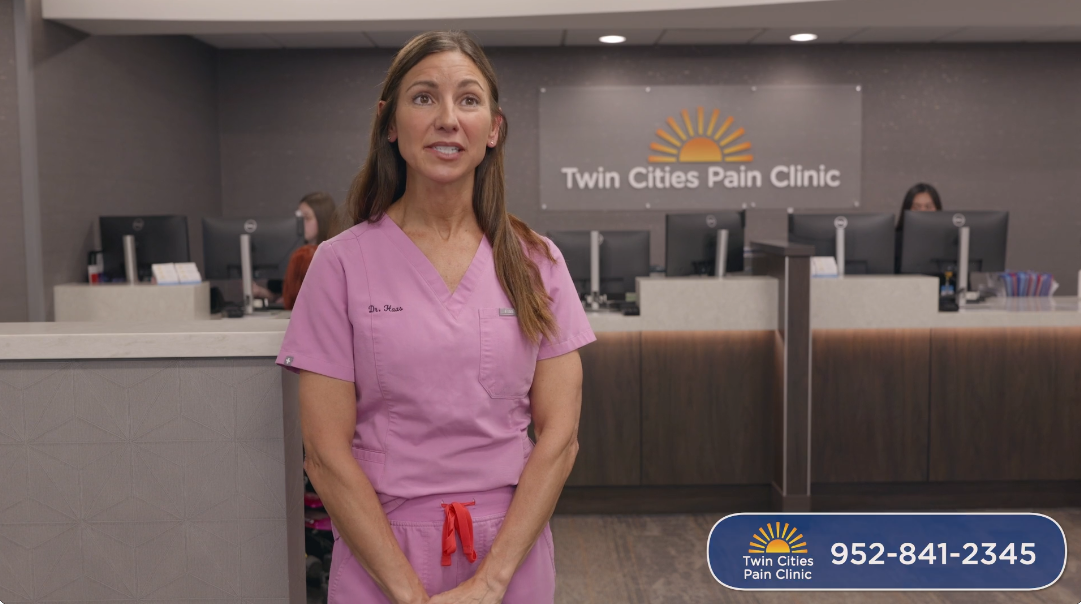
Dr. Haas at Twin Cities Pain Clinic
Thirty seconds doesn't leave room for error, so for this healthcare digital ad campaign, we did something we don't normally do: we wrote a script as a safety net alongside the real interviews, just in case the unscripted footage didn't hold up at that length.
It held up.
When our editor sat down to cut the spots, the fully scripted version — the one built to hit every marketing message precisely — felt technically correct but flat. So he tried something different: cutting a version built entirely from the most genuine, unscripted moments in the interviews, without worrying whether it covered every talking point.
The difference was immediate. As our editor put it: "You're like, wow, he really understands me. This one, you don't feel that — it's just features and benefits."
This is the core tension in healthcare marketing: scripted messaging can be accurate without feeling true, while authentic, unscripted testimony builds patient trust because it feels human, not rehearsed.
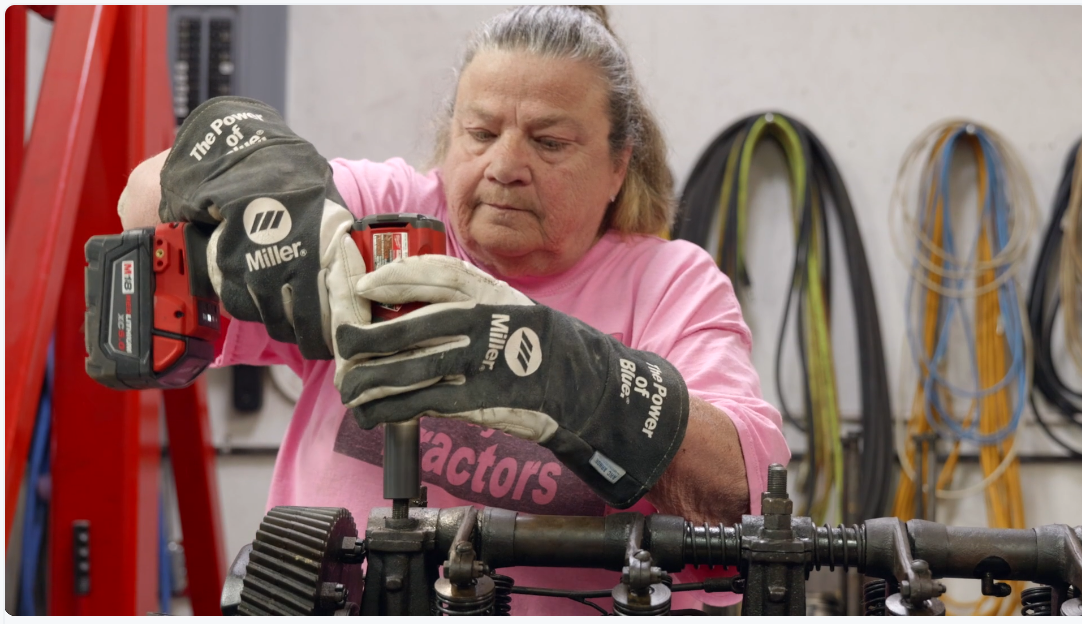
The result is three distinct 30-second ads, each testing a different theory of what makes healthcare video marketing work:
One fully scripted spot, combining both interviewees' delivery of the key messaging points
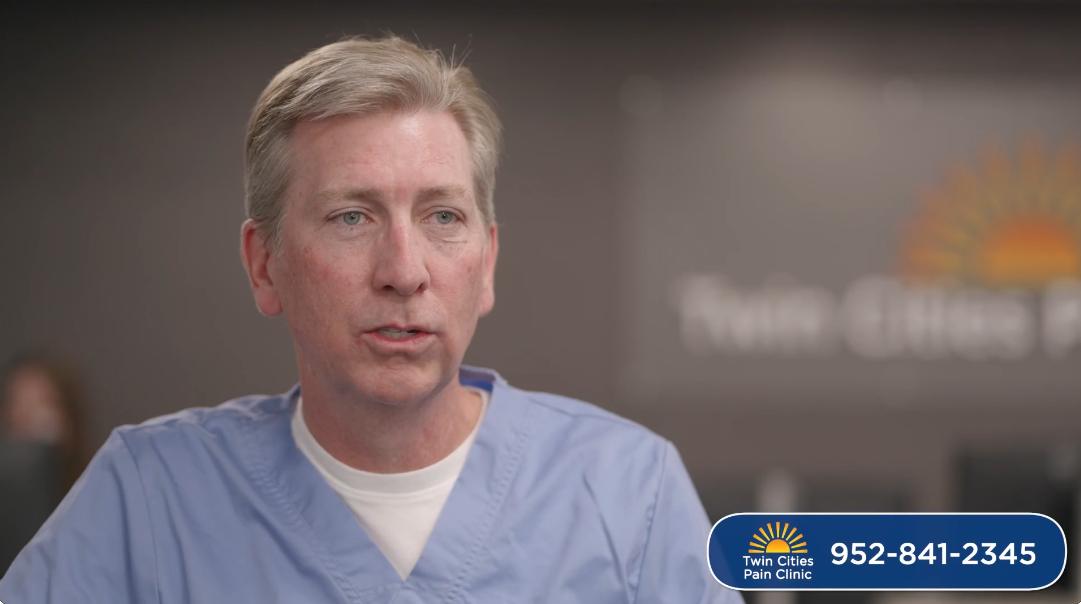
One fully authentic spot, built entirely from the pain clinic's female provider's real interview
One fully authentic spot, built entirely from Dr. Will's real interview
TCPC ran all three. We're still watching to see which performs best — but for us, it raised a genuinely interesting question: does hitting every message point matter more than making a viewer feel truly understood in a patient testimonial video? We suspect the answer is no.
30-Second Digital Ads
The Patients: Two Stories, One Truth
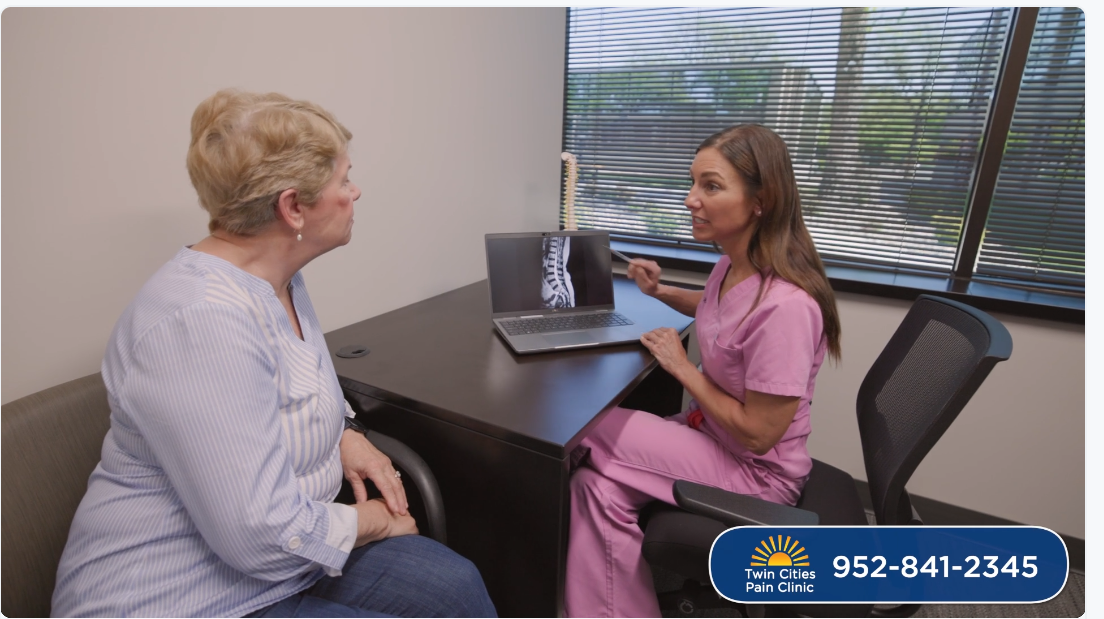
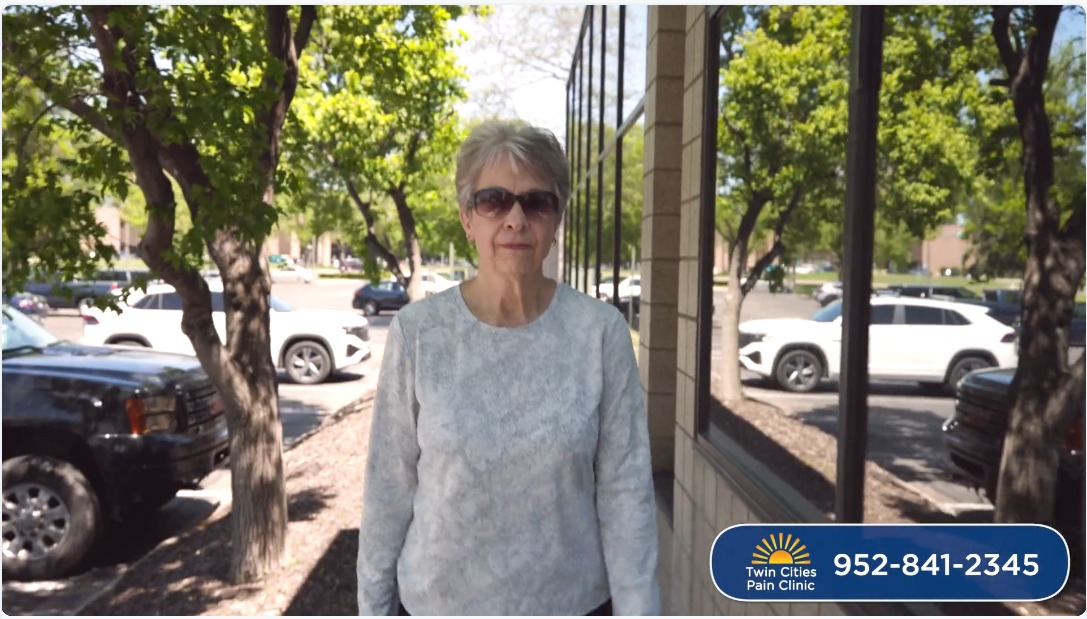
Nothing carries the weight of a patient describing their own transformation. TCPC's patient testimonials do that — plainly, without dramatization, because the truth didn't need any help. This creative approach was used for short 30sec ads as well as the full patient story video featured on their website.
Finding herself in someone else's story
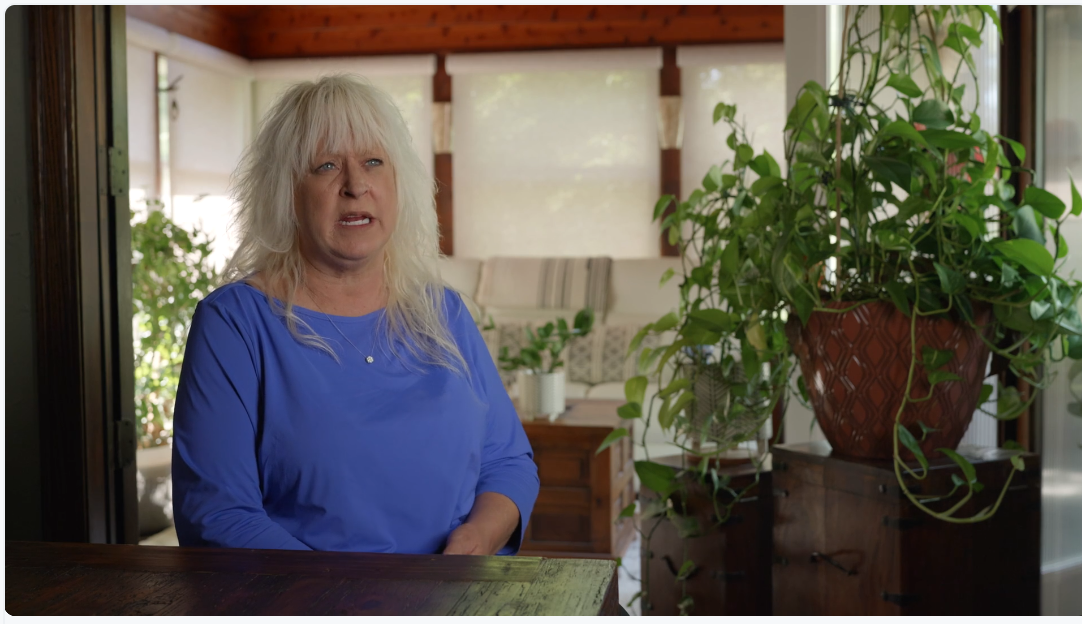
After Carla came to TCPC after years of unexplained nerve pain in her feet — pain that, as she put it, "was 24 hours a day. It never turned off." She'd already lost the active life she loved: travel, gardening, time with friends. At 49, she remembers thinking, "this is the way I'm gonna feel the rest of my life."
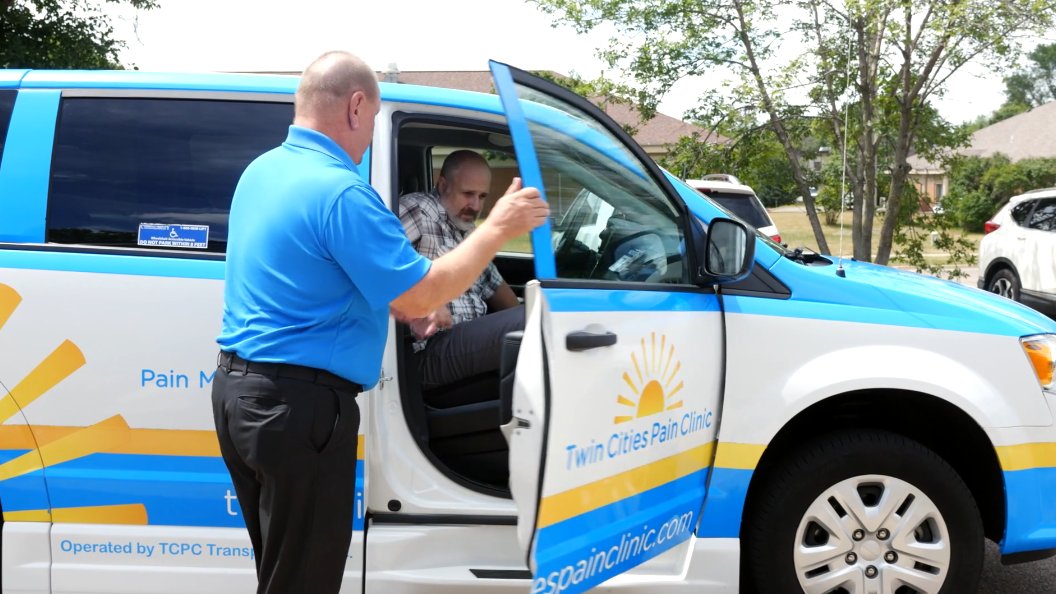
Everything changed the night she came across a story about neuropathy from Twin Cities Pain Clinic: "I sat in my living room in the dark with my little computer screen and bawled my eyes out and I said, this is me."
After a spinal cord stimulator implant, she describes the moment it was turned on: "It was like everything started tingling, and then all of a sudden, slowly my numbness was kind of disappearing, like I got a reboot."
"I was in pain 24/7. Now I'm in relief 24/7. That's a pretty good trade off."
"This is not a life."
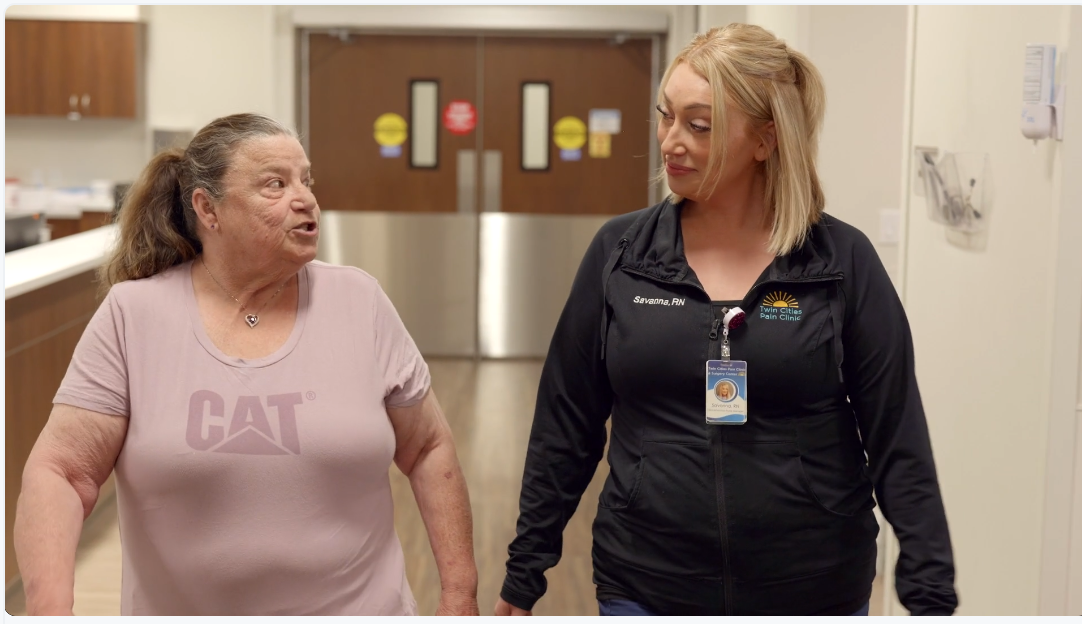
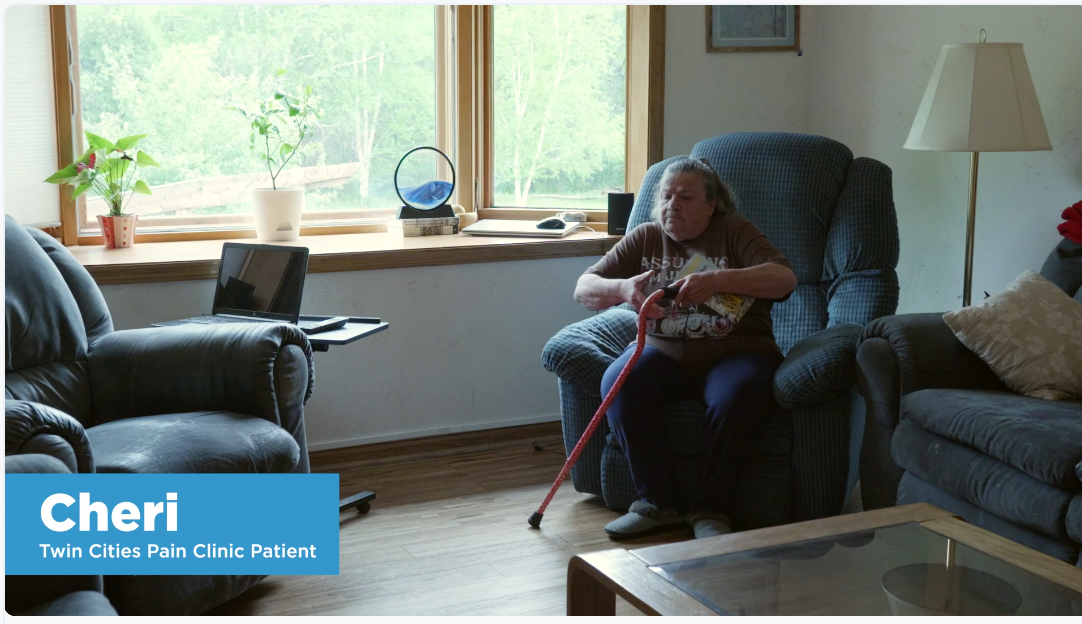
The second patient, Cheri’s story centers on rheumatoid arthritis that had traveled into her spine, deteriorating seven discs. She'd already been through ablations, injections, MRIs, and scans — and had been told by one doctor, "I've come to the end of what I can do for you."
The hardest part wasn't the pain itself. It was watching her granddaughters swim without her:
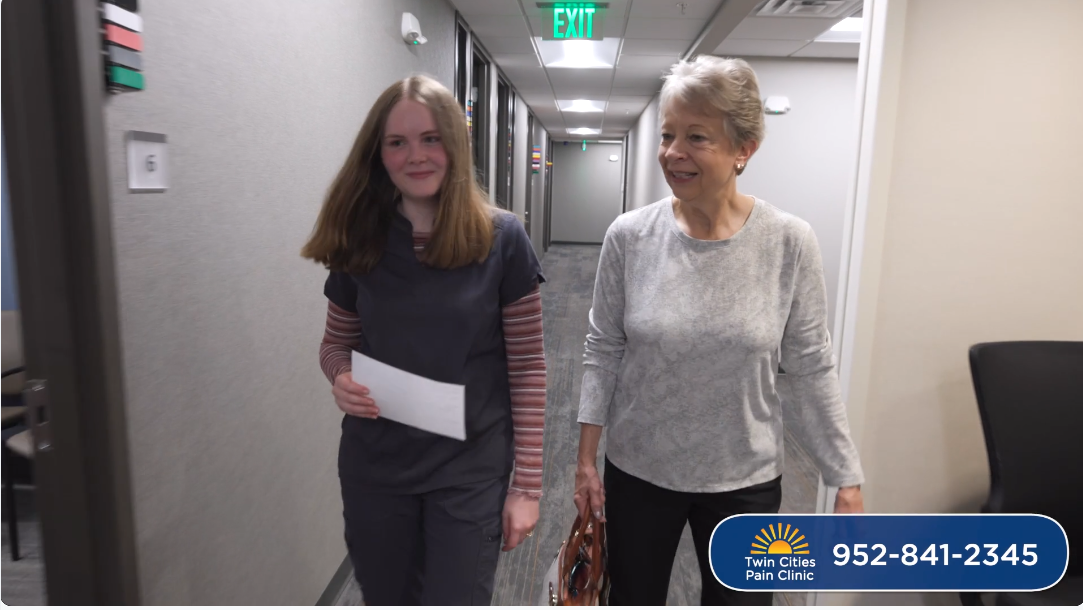
"I couldn't get in the pool with them anymore... I would sit there and watch them swim and just think, this is not a life." She tried TCPC anyway — and the shift started at the front door: "People were smiling, and the woman said, welcome, how are you today? I said, this is pretty interesting. I've never been treated like this before."
After a pain pump procedure, she woke up in recovery and turned to her husband: "I started laughing and I said, I have no pain. I handed him my cane and I said, take this. I'm never gonna need this again."
Today, her pain — once a constant nine or ten — is at zero. And this year, for the first time in years, her granddaughter gets her back in the pool.
Patient Testimonial: Carla’s Relief from Diabetic Foot Pain | Twin Cities Pain Clinic | Produced by Storyboard Films
Patient Testimonial: Cheri’s Arthritis Relief Story | Twin Cities Pain Clinic | Produced by Storyboard Films
The Providers: Coach & Cheerleader
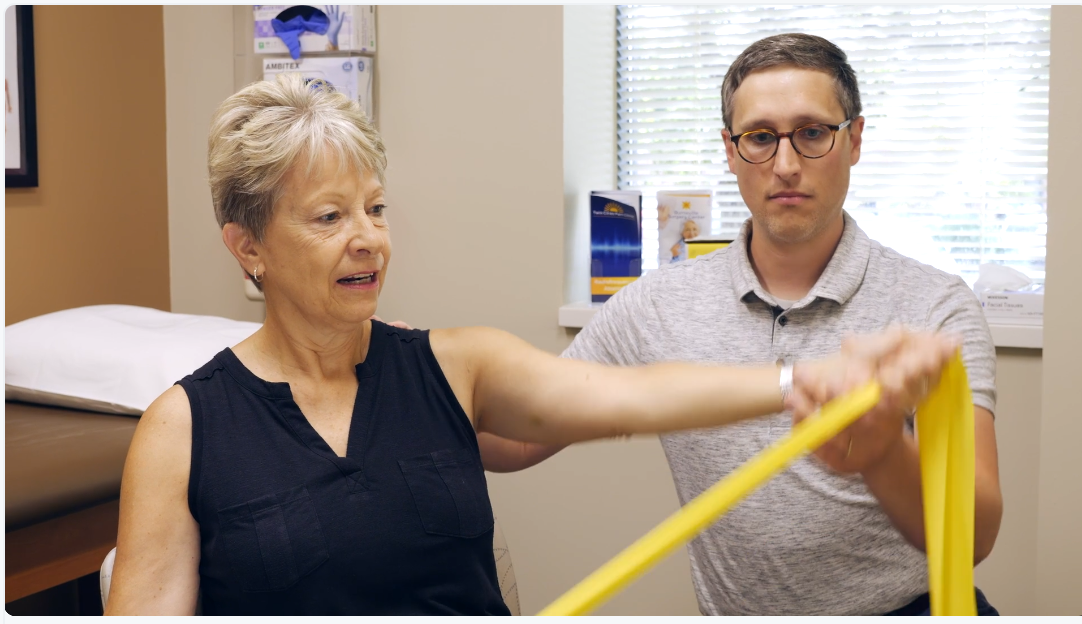
Ads build awareness. Testimonials build trust. And for TCPC, compelling testimonials also come from the providers who treat patients every day.
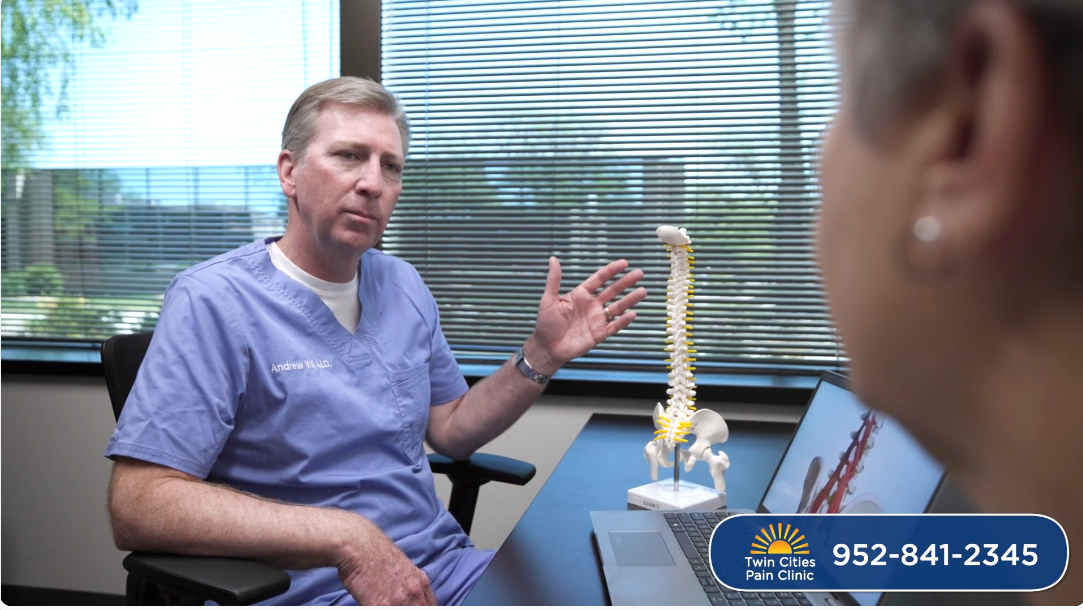
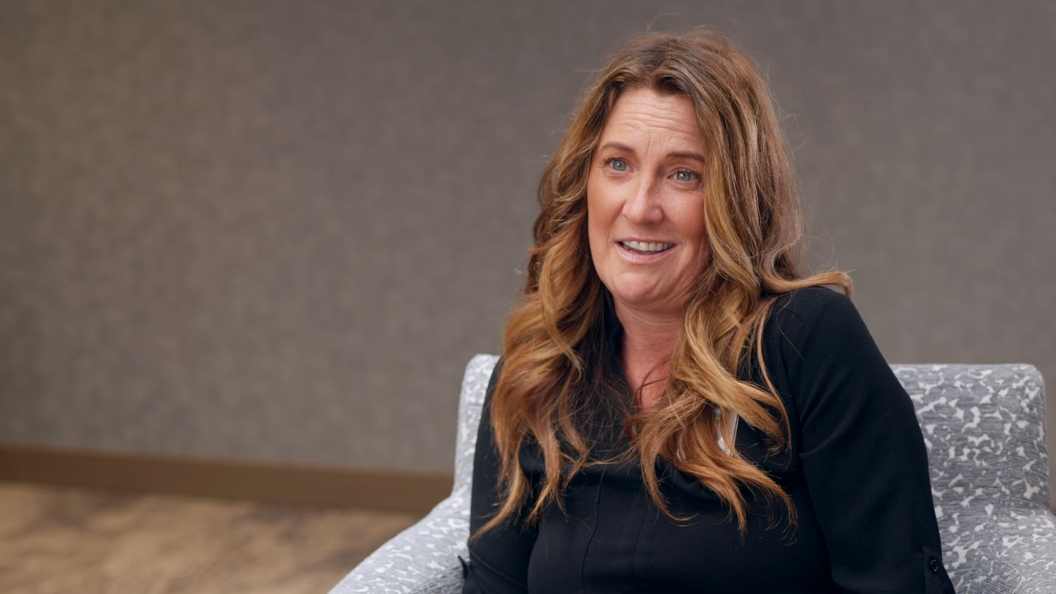
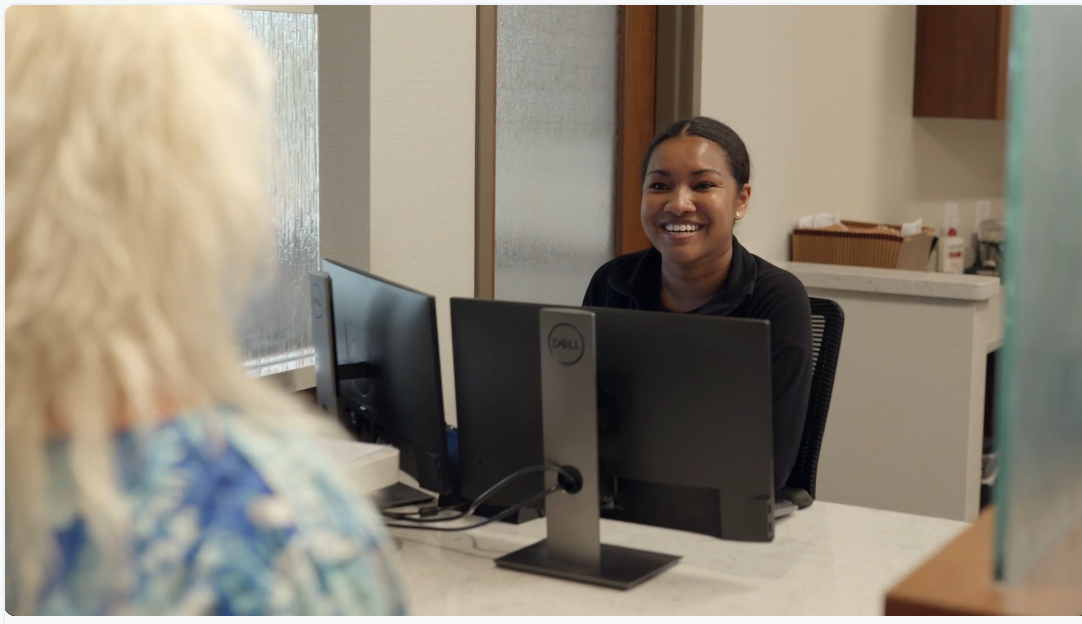
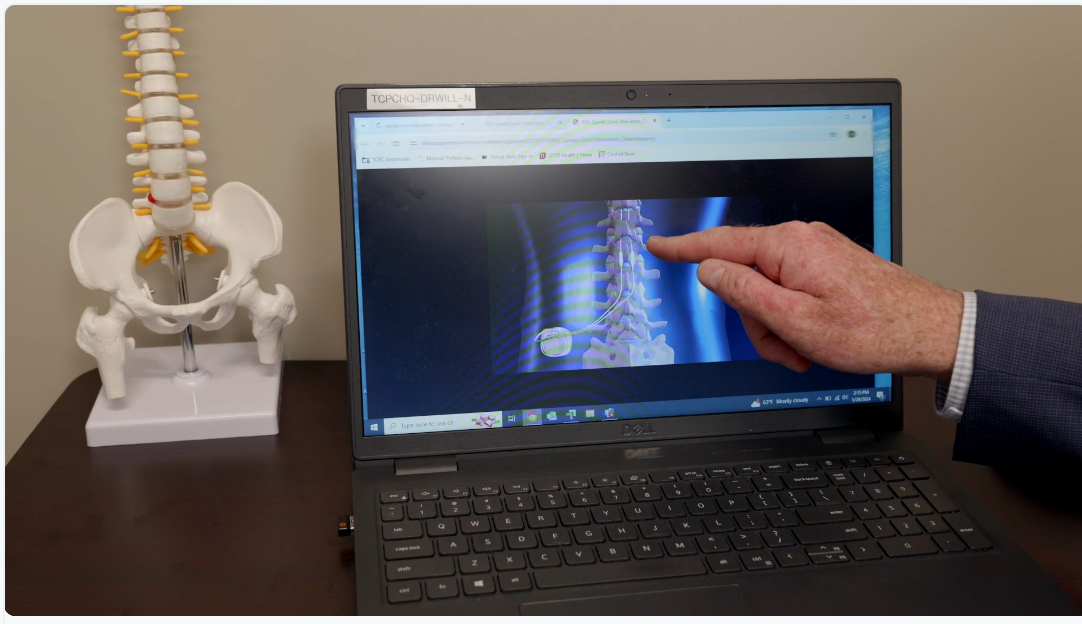
One of the most striking lines from our conversations with TCPC's clinical team wasn't written for the camera — it came up naturally when a provider described what patients say most often once they've started treatment:
"The biggest complaint we get from our patients is like, why didn't I hear about you sooner?"
That single line captures the core marketing challenge for any specialty clinic: the people who need you most often don't know you exist. The provider testimonial video leans into that honestly, without overselling:
"Part of our job is to be their coach and cheerleader."
"Probably the biggest risk is disappointment. I don't want to disappoint people."
That candor — acknowledging the stakes rather than glossing over them — is exactly what makes the testimonial land. Patients don't trust perfection. They trust people who take the work seriously.
A Five-Year Partnership
Storyboard Films and Twin Cities Pain Clinic have worked together since 2021, starting with the founder's story video and this spring marking our sixth video project working with this specialty clinic. It’s been wonderful to witness TCPC’s growth, from its beginnings in Eden Prairie to nine locations across the Twin Cities.
Clinical accuracy matters in medical practice video production, and getting it right takes real collaboration. Early on, we worked closely with Dr. Will to shift language from clinical terms like "neuropathy" toward the phrasing patients actually use and search for, like "diabetic foot pain" — precise enough to be medically accurate, clear enough for a viewer to recognize their own experience in it. This kind of consumer-friendly language matters as much for SEO and patient search behavior as it does for on-camera clarity.
That kind of precision only comes from a genuine working relationship, not a one-off shoot. On every project, Jeff Blanchard, their Marketing Manager, has been an active partner rather than a hands-off client — coordinating patient schedules, managing expectations, even helping set up exam rooms for b-roll. He's described our crew's professionalism and humor as something that visibly puts patients at ease on camera, which matters when the person you're filming has never told their story publicly before.
We don't have hard conversion numbers to point to from this partnership — TCPC hasn't shared detailed ad performance data, and we're not going to manufacture a stat that isn't there. But six years, a founder video, multiple patient testimonials, and now a 2026 ad campaign later, the clearest proof of what a long-term healthcare video marketing partnership can produce is the simplest one: they keep coming back.
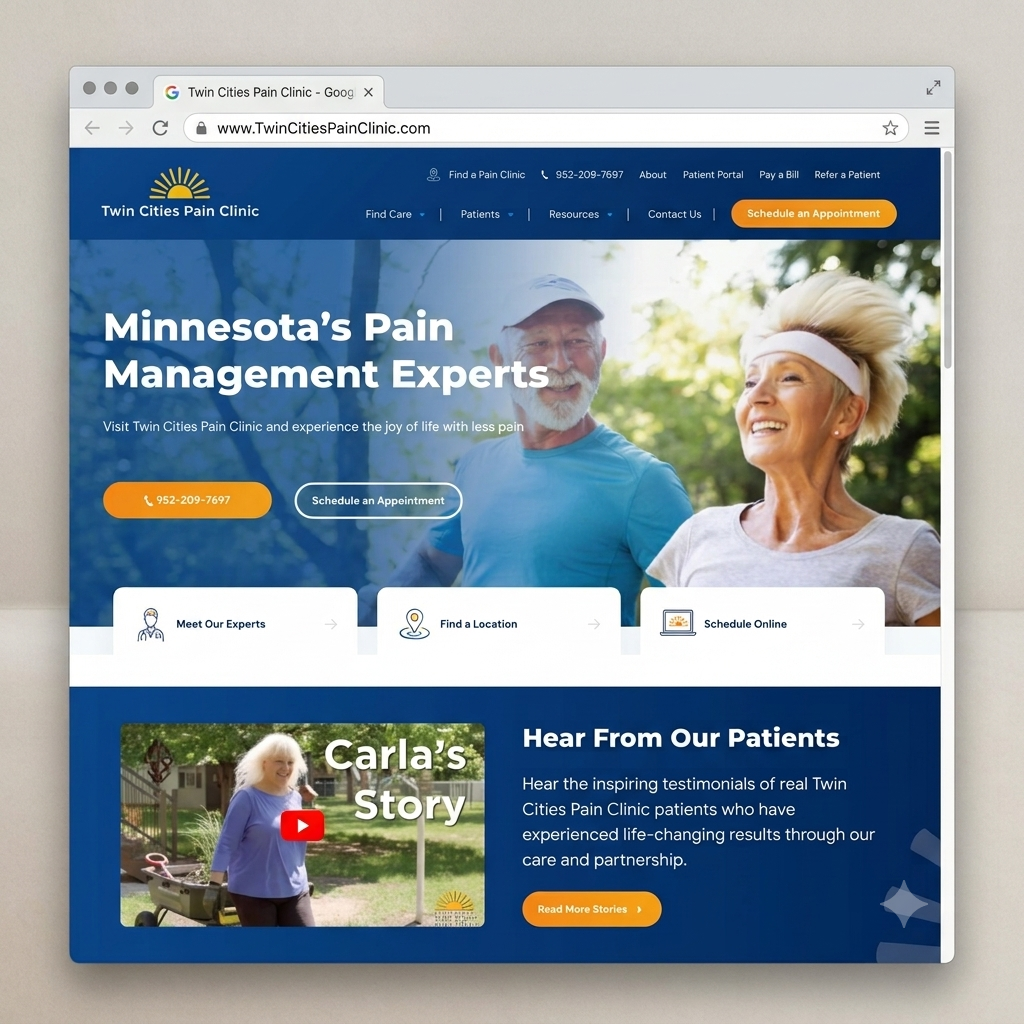
Patient testimonial video, featured on TCPC's homepage.
Why This Approach Works
None of these stories needed a script. They needed a camera pointed at the truth, and to let people tell it in their own words. That's the core of documentary-style video, and it's especially powerful in healthcare, where skepticism is high and trust has to be earned honestly. Documentary-style video builds trust in healthcare marketing because it replaces scripted claims with real patient and provider testimony — proof, not promises.
For Twin Cities Pain Clinic’s video work with Storyboard Films, that meant:
A 30-second ad that states a clear promise and backs it up
A brand story that grounds the clinic's mission in one physician's real turning point
A provider testimonial that trades polish for honesty
Patient testimonials that let transformation speak for itself
Across every format, the approach is the same: real people, real outcomes, told with enough craft to be watchable and enough restraint to stay believable.
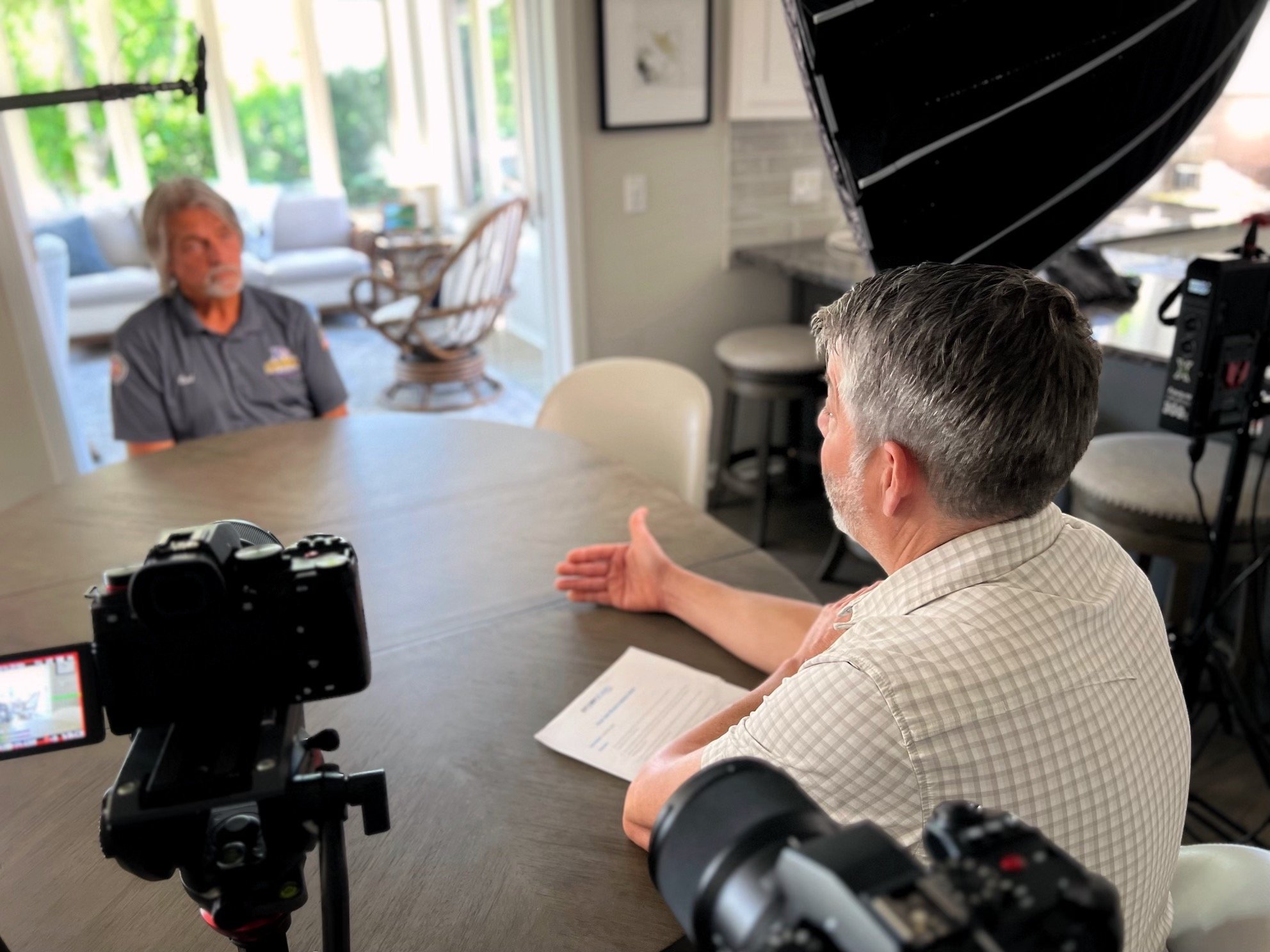
Storyboard Films Founder & Creative Director : Jeff Brandt
Is Documentary-Style Video Right for Your Industry?
Healthcare isn't the only industry where trust is the hardest thing to market — and the easiest thing to lose with the wrong approach. As a healthcare marketer if any of these topics are showing up in your brand strategy sessions for your medical practice and your organization is weighing how to tell a more credible story, let’s talk.
patient testimonial video
video marketing for medical clinics
healthcare content brand strategy
building patient trust through authentic video
